Table Of Content
And of course, you don’t have to start from scratch either. Choose a template from Venngage’s library to strike the perfect balance with your next design. Radial balance is when you distribute elements around a single point — usually the center of a composition. From the arrangement of the frills on the pinecone above, or the arrangements of petals in a rose, are all examples of radial symmetry. You often see pages where the eye automatically flows from text to image and back to text smoothly.
A Brief Guide to Balance — A Design Principle
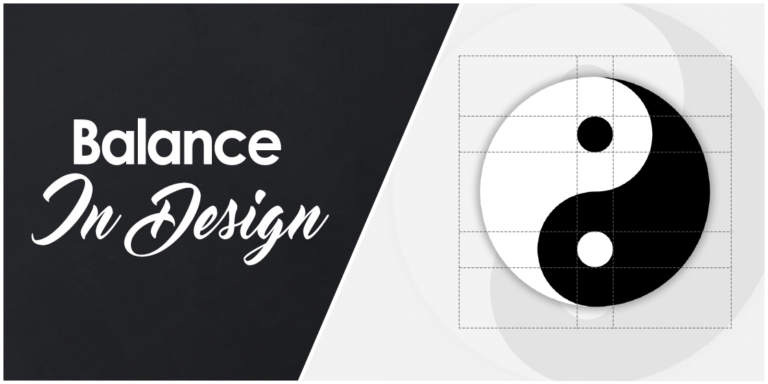
When designing a layout, take a step and ask yourself if the overall composition feels balanced. If one elements draws too much attention, you can experiment with size, color, contrast, or density to help redistribute the visual weight. It is the careful distribution of visual weight in your website design, logos, blog images, and many other design assets. Balance has to be visible in your images, colors, texture, and space to give it stability and order. The easiest way to achieve balance is to center everything right down the middle.
Visual Weight
Design and the circular economy – deep dive - ellenmacarthurfoundation.org
Design and the circular economy – deep dive.
Posted: Thu, 19 Oct 2023 05:44:40 GMT [source]
Symmetrical balance is achieved when images on one side are mirrored on the other side of one or more axes, depending on the type of symmetry. But besides symmetrical balance there are other types to know about too. Balance in UI design is important to achieve a sense unity in your overall design. A lack of balance can result in visual tension, which should be avoided in most cases. However, if done carefully, visual tension can be used to achieve a desired result.
Movement
The screenshot here is from the “About” page, but the other pages of the website are similarly balanced. When the reflection is a perfect mirror image, the symmetry is said to be pure. Much of the time it won’t be perfect and each side will have slight variations. This is near symmetry, and it’s more common than pure symmetry.
Balance: the Basic Principles of Design
The text below the grid seems to hang from it, and it’s light enough on its own not to throw the composition out of balance. As I’ve reiterated throughout the series, what follows is my opinion. Thinking critically about the designs is more important than our agreeing about what we think. The symmetry can even occur over multiple axes at the same time.
Resources created by teachers for teachers
Design standards for icons: The independent role of aesthetics, visual complexity and concreteness in icon design and ... - ScienceDirect.com
Design standards for icons: The independent role of aesthetics, visual complexity and concreteness in icon design and ....
Posted: Wed, 24 Aug 2022 17:42:34 GMT [source]
Consider the ad industry for example – at the current growth rate of advertising, the global ad market is projected to reach $875 billion by the year 2026. Visuals, in fact, top the charts when it comes to content types for ads. This makes understanding the concept of balance in design even more relevant. There is no right or wrong way to achieve balance in a design, painting, photograph etc.
This picture of an evening-lit city street encapsulates rhythm perfectly. The digital design feels lively, as though dancing or vibing to its virtual music. Visual weight ensures things are evenly distributed, like this image of a beach with water and trees. There's enough balance throughout, thanks to the clouds and reflection in the water. Contrast creates definitions and emphasizes different elements.
Balance in design can also be seen in elements that are grouped around a central point. You can have balance in design by using colors, as can be seen in this Evian print ad. Not only is this an excellent example of a symmetrically balanced design, but it is also a good representation of having balance by color. The incredible blending of dark colors with lighter ones emphasizes the brand name and makes it stand out. This movie poster for Sherlock Holmes is a perfect example of symmetrical balance. This type of balance places elements in an even and orderly fashion.
A large circle will draw more attention than a smaller circle, much as a bright blue square will draw more attention than a light gray square, of the same size. Knowing how to place these elements so that the composition doesn't get too ''heavy'' on one side or the other is a mark of good graphic design. Another way to achieve balance is to increase or decrease the size of the design elements. The larger the size of the design elements, the heavier the visual weight will be. In this type of balance, the visual elements of art start from a central point within the artwork and branch outward. Radial balance is another form of symmetry that offers stability and a point of focus at the center of the artwork.
The lines in this image run in every direction, some parallel and others perpendicular to each other. They're also used to add details to the buildings and individual bricks to the wall. Changing the proportion of one item relative to another can make it appear more or less important.
Whether it’s used to describe your diet, the judicial system, or standing up on your own two feet; balance is normally considered a very good thing. In the vast majority of cases, nobody wants to lack balance in anything. Symmetry, on the other hand, is a more purposeful design in which everything is even—vertically, horizontally, or both. In this image, value sets the mood of a wet and dreary scene.

Alignment is all about how elements on a page relate to each other. Keeping tabs on how all elements align can help you ensure good proximity of related items, hierarchy of items, repetition, white space and more. When used properly, variety in colors, shapes, typography and more can keep the reader from visually tuning out your content. Gestalt Principles emphasize the human tendency to perceive unified wholes in complex arrangements.
An example of a pattern on the web is the use of backgrounds in websites and applications to create harmony and a cohesive feel. A logo will make viewers and users familiar with the brand. They will recognize and distinguish its voice and tone from other brands. Without hierarchy, all content would appear the same, and nothing would stand out and signal importance, which would lead to confusion for viewers. The position of elements signifies importance - the most important information is always higher on a page, whereas if something is at the bottom, it is not as important. There is a lack of contrast in the first element - this makes reading the text much harder.
As such, it’s related to proportion, emphasis and alignment. But the key here is that visual hierarchy helps establish the order of importance in a design. Sometimes called scale, proportion refers to the relative size of all the elements on the page, including imagery, graphics, patterns, text and more. Symmetrical Balance is when design elements on the the left side of an image mirror the design elements on the right side, or the top mirrors the bottom of the composition. Scale refers to the relative size of elements in a design, impacting its importance and focus.
Many beginning designers feel the need to pack every pixel with some type of “design” and overlook the value of white space. But white space serves many important purposes in a design, foremost being giving elements of the design room to breathe. Negative space can also help highlight specific content or specific parts of a design. Penji’s graphic designers understand balance in design, you don’t have to worry about doing it yourself. Watch our demo video here or sign up today to get them started on your designs.
In some cases, negative space is used to create secondary images that may not be immediately apparent to the viewer. This can be a valuable part of branding that can delight customers. Take the hidden arrow in the FedEx logo, for just one example. White space—also referred to as “negative space”— is the areas of a design that do not include any design elements. Hierarchy is another principle of design that directly relates to how well content can be processed by people using a website. The most important elements (or content) should appear to be the most important.




No comments:
Post a Comment